AI in the Legal Department: Status Quo and Future Perspectives
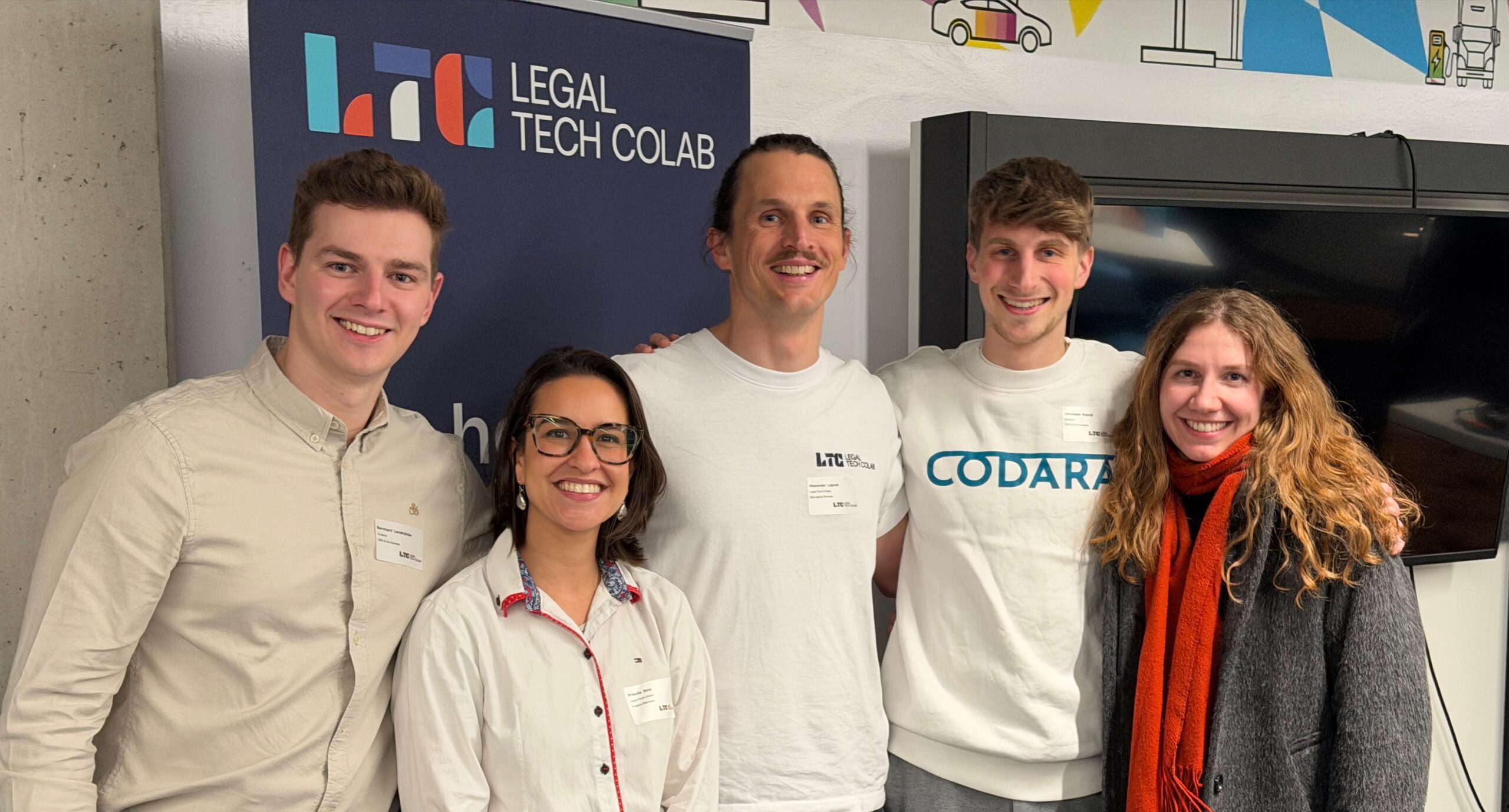
On February 26, 2026, we gathered at the Munich Urban Colab for the latest BUJ Regional Meeting to explore the AI transformation of legal departments alongside 30 in-house counsel.
How far along are legal departments really when it comes to the adoption of Artificial Intelligence? What structures need to be established so that AI moves beyond experimentation to become a responsible, scalable tool that eases the daily legal workload?
These central questions were the focus of the recent BUJ Regional Meeting in Munich, where we welcomed around 30 in-house counsel to the Munich Urban Colab. Together with the Federal Association of Corporate Lawyers (BUJ), we hosted an evening that shifted the focus away from theoretical hype toward tangible practical insights.

Strategy and Practice: The Keynote from Siemens
A major highlight was the keynote by Dr. Matthias Wöllner, AI-Delivery Team Co-Lead at Siemens. In his presentation, he examined the two sides of the coin that every modern legal department must address:
- Structural Empowerment: How does a legal department position itself organizationally and regulatorily to become “AI-ready” in the first place? He emphasized the necessity of clear governance structures as the foundation for innovation.
- Productive Use: The use cases presented demonstrated that AI is no longer a vision of the future at Siemens. From automated document analysis to support in complex decision-making processes, the examples made it clear how AI is already being used productively to create value in the legal environment today.

Innovation “Made in LTC”: Three Practical Solutions
The pitches from three LTC members showed that the technological answer to these challenges often comes from the startup ecosystem. They presented solutions that are already in practical use by legal professionals:
- trail (Anna Spitznagel): With a focus on AI Governance and AI Risk Management, trail addresses one of the biggest obstacles for companies: the platform supports organizations in implementing responsible AI structures that are both compliant and operationally efficient.
- Codara (Bernhard Landrichter & Christian Kaindl): The founders, who traveled all the way from Vienna, demonstrated what proactive compliance looks like today. Their solution automates the monitoring of regulatory developments and enables a structured assessment of legal changes: a crucial lever against the increasing flood of information.
- bayshore (Paul F. Welter): The focus here is on the automation of complex legal and compliance processes. Based on granular “knowledge trees,” bayshore enables automation that remains traceable and controllable at all times, tailored to the different roles and needs within a legal department.

Connecting Practice and Innovation
Following the intensive professional insights, the evening transitioned into a relaxed networking session. Over drinks and snacks, participants took the opportunity to bridge the gap between established corporate practice and the fresh spirit of legal-tech founders.
Our thank you goes also to Nader Karama and Dr. Christoph Schmitz from the BUJ for the collaboration on this event.

